

 Notes
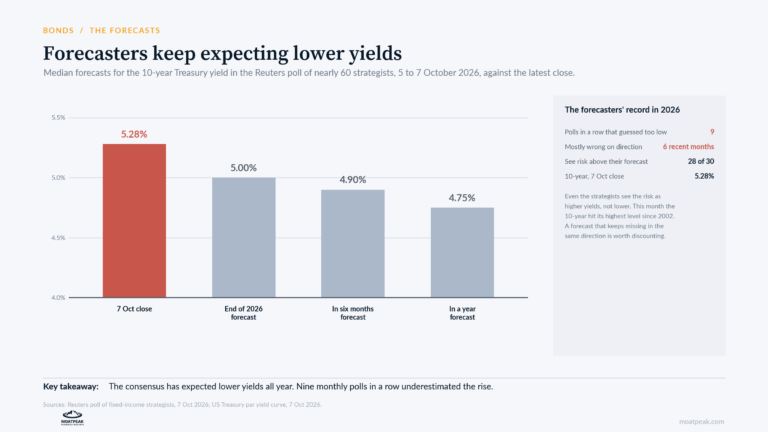
Bond strategists still expect long-term Treasury yields to fall.
In a Reuters poll taken 5 to 7 October, the median forecast from nearly 60 of them puts the 10-year yield at 5.00 percent by the end of the year, 4.90 percent in six months and 4.75 percent in a year.
 Notes
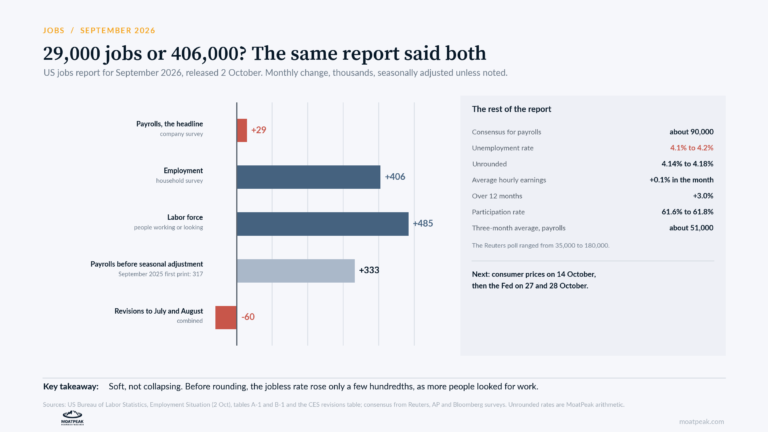
The September jobs report said 29,000. It also said 406,000.
Payrolls, the headline number from the survey of businesses, rose by 29,000, short of the roughly 90,000 expected. The July and August figures were also revised down by a combined 60,000.
 Notes
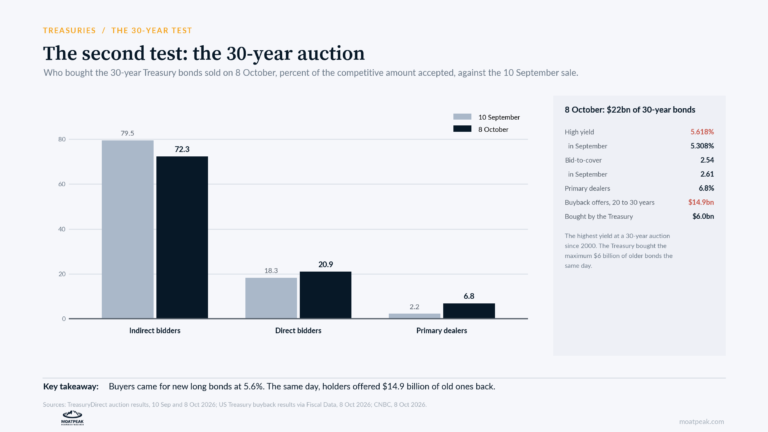
Thursday was the second test for long-term Treasury demand. Buyers passed it, at a price.
The Treasury sold $22 billion of 30-year bonds at 5.618 percent, the highest yield at a 30-year auction since 2000. Bids came to 2.54 times the amount on offer, close to September’s 2.61.
 Notes
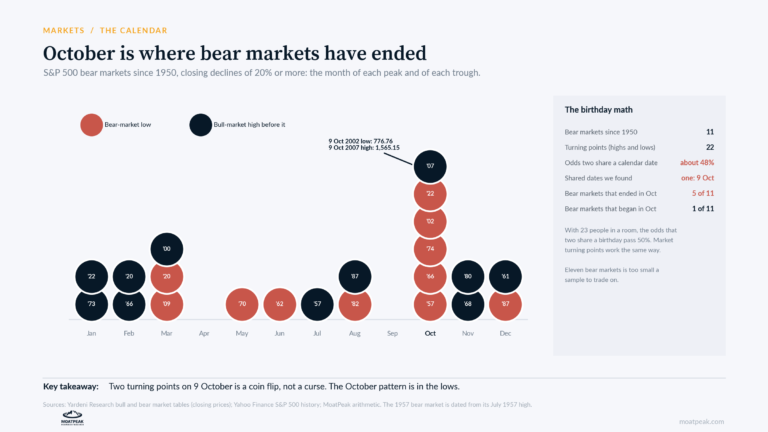
9 October marked both the 2002 bear market low and the 2007 bull market high
Tomorrow is 9 October, a date that stands out. On that day in 2002, the S&P 500 hit its bear market low of 776.76, and on that day in 2007 it hit its bull market high of 1,565.15.
 Notes
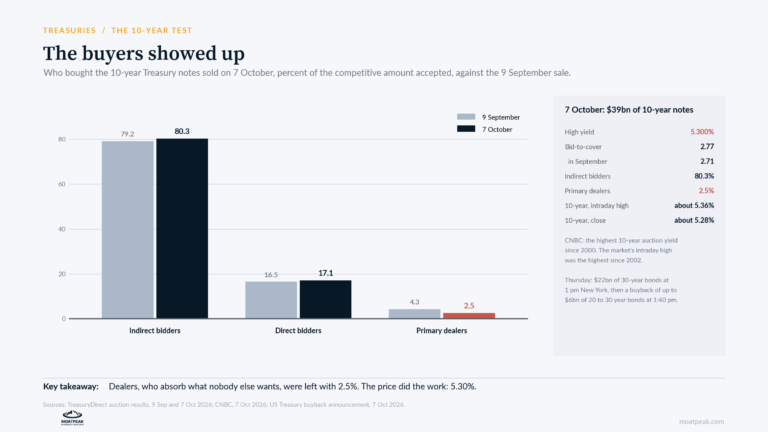
Yesterday we said to watch who would show up at this week’s Treasury auctions. For the 10-year notes, buyers did.
The Treasury sold $39 billion of 10-year notes at a yield of 5.300 percent, the highest at a 10-year auction since 2000, CNBC reported.
 Notes
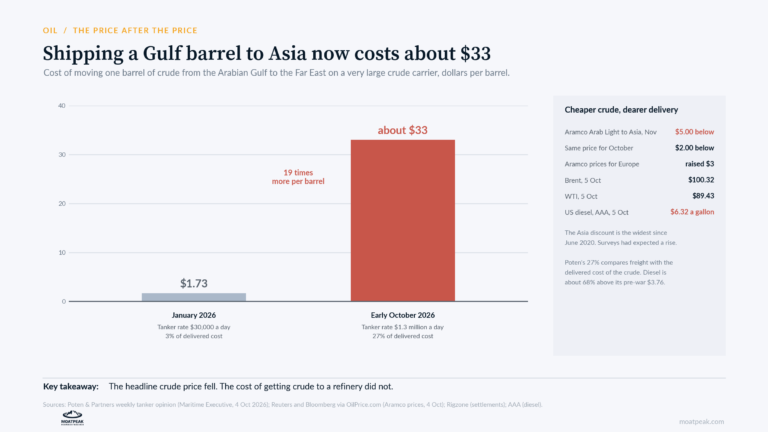
Oil has gotten cheaper. Getting it to a refinery has not.
Saudi Aramco set its November price for Arab Light crude to Asia at $5 a barrel below the Oman and Dubai benchmark, the biggest discount since June 2020.
 Notes
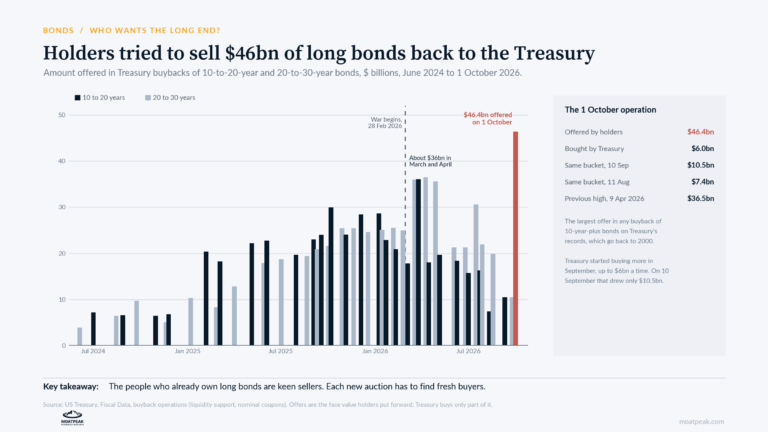
Last week, holders tried to sell $46 billion of long-term bonds back to the US Treasury.
On 1 October, the Treasury offered to buy up to $6 billion of older bonds maturing in 10 to 20 years. It was offered $46.4 billion.
 Notes
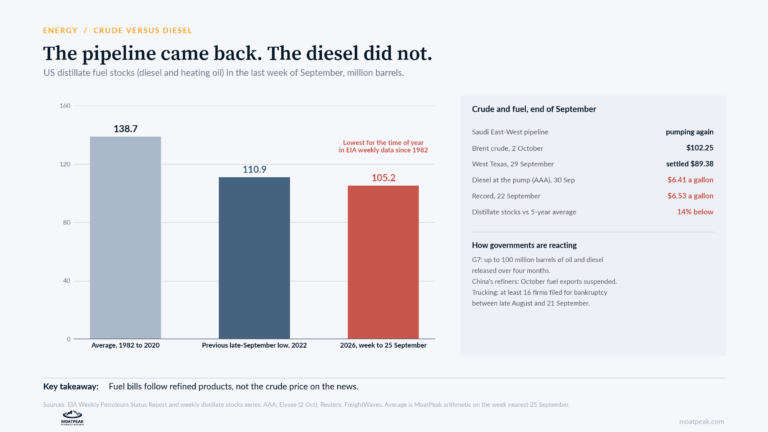
Crude oil found a way around Hormuz. Diesel did not.
Saudi Arabia’s East-West pipeline, which lets oil bypass the Strait of Hormuz, is running again after the attacks in September.
 Notes
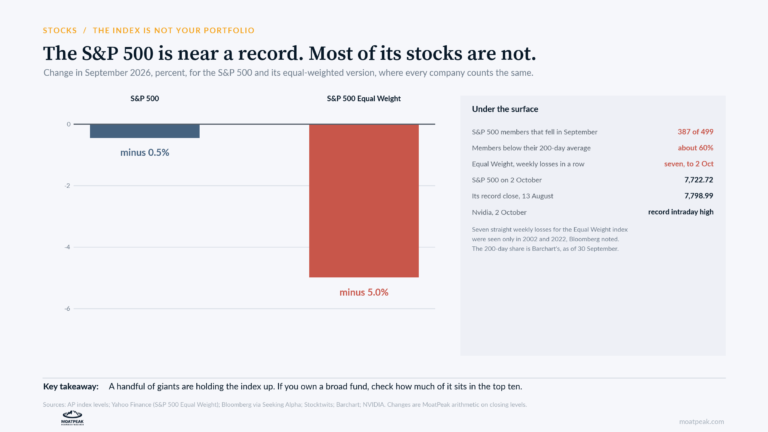
The S&P 500 ended last week less than 1 percent below its record. Most of the stocks in it did not follow along.
In September, the index fell about 0.5 percent, while its equal-weighted version, where every company counts the same, dropped about 5 percent.