

What matters more is how that revenue breaks down.
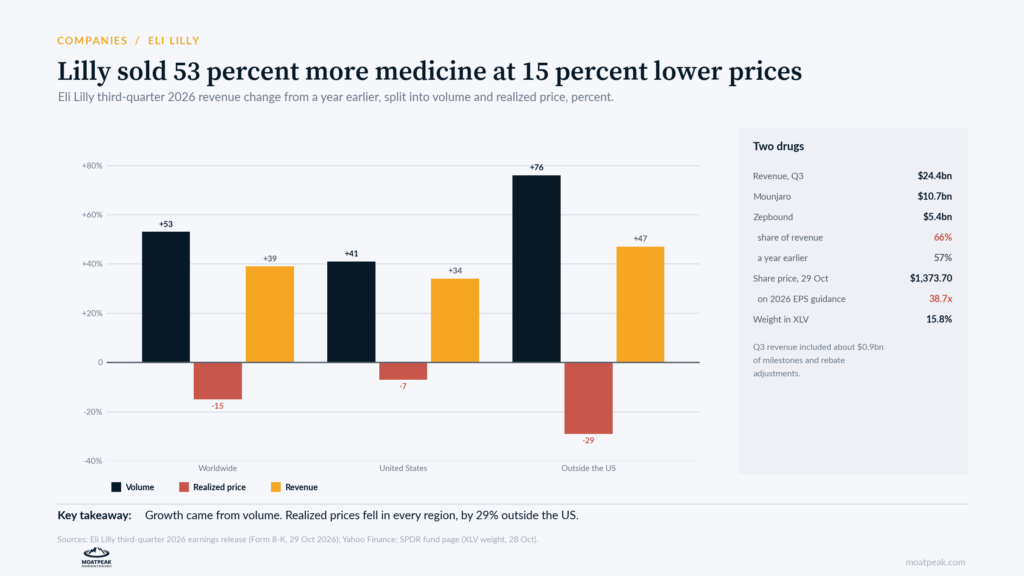
Lilly sold 53 percent more medicine, at realized prices 15 percent lower. In the US, prices fell 7 percent; outside the US, they fell 29 percent. Revenue also included about $900 million of milestones and rebate adjustments.
Two drugs now carry the company. Mounjaro ($10.7 billion) and Zepbound ($5.4 billion) made up 66 percent of revenue, up from 57 percent a year earlier. Lilly, in turn, is 15.8 percent of the healthcare sector ETF, XLV.
At $1,373.70, the stock trades at 38.7 times the midpoint of its 2026 earnings guidance.
Our read: falling prices and surging volume are what a widening market looks like, which is good for patients. For shareholders, the price assumes volume keeps outrunning the price cuts for years, and the more competitors and coverage deals there are, the harder that gets.
Research, not advice.
Get the Weekly Explainer
The biggest market story explained, every week. Free, by email.
Explore the research library
Company, industry and market reports with sources, charts, possible outcomes and the full evidence.
More free explainers
Markets, companies, portfolio basics and investing foundations. All free articles.
Back to Learn