

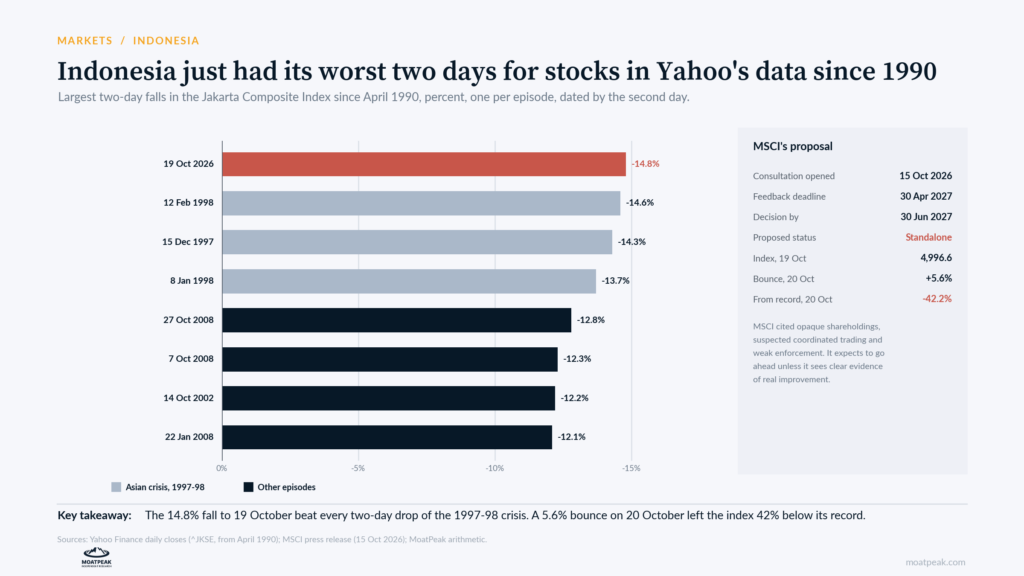
The Jakarta Composite fell 11.6 percent on 16 October and another 3.6 percent on 19 October. The combined 14.8 percent drop beat every two-day fall of the 1997-98 Asian crisis. Even after a 5.6 percent bounce on 20 October, the index was still 42 percent below its January record.
The trigger was MSCI. On 15 October, the index provider proposed moving Indonesia from emerging-market status to standalone, citing opaque shareholdings, suspected coordinated trading and weak enforcement. It will decide by 30 June 2027 and says it expects to go ahead unless it sees clear evidence of improvement.
Our lens: a seat in the major indexes is a moat for a whole market. It brings passive money that does not have to be won stock by stock. Losing it means forced selling and a smaller pool of buyers for years.
The timing is the notable part. Index funds would sell only if and when the change takes effect, yet the market has already fallen. Investors aren’t waiting for the decision, and Indonesia has until next June to prove its free-float and disclosure reforms are real.
Research, not advice.
Get the Weekly Explainer
The biggest market story explained, every week. Free, by email.
Explore the research library
Company, industry and market reports with sources, charts, possible outcomes and the full evidence.
More free explainers
Markets, companies, portfolio basics and investing foundations. All free articles.
Back to Learn