

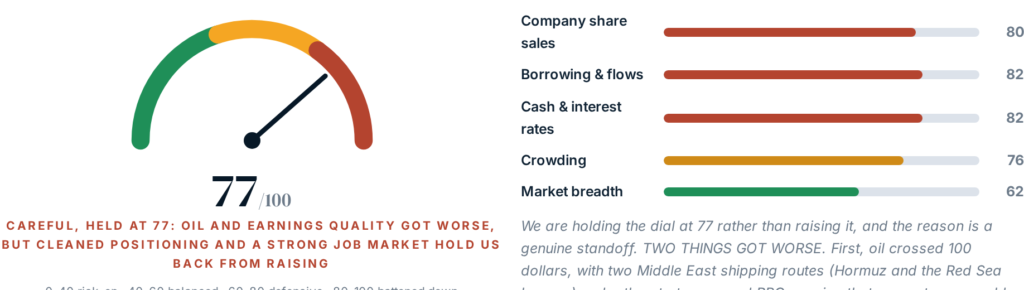
This week, oil quietly went above $100 a barrel for the first time in months, but the stock market hardly reacted. That lack of response is the real story, and it’s not a good sign.
Here’s what’s causing the change. Two key shipping routes in the Middle East are under threat right now: the Strait of Hormuz, which handles a large part of the world’s oil, and the Red Sea, where tankers were recently attacked. This isn’t just a headline that will disappear by the end of the week. The way the oil market is behaving shows there’s a real supply problem. One research team we follow warns that in the worst case, oil prices could approach their 2008 record of nearly $146.
Why does this matter to everyday investors? Oil quietly affects almost everything. When oil prices go up, so do prices at the gas station and grocery store. That keeps inflation high, which means interest rates stay high too. This puts pressure on expensive stocks and makes mortgages more costly. In a way, it acts like a tax on the whole economy.
There’s also an uncomfortable pattern: when the stock market ignores an oil shock, it’s usually the market that ends up being wrong.
What does this mean for you? Don’t be fooled by the calm. When most people stop worrying about a real risk, it often becomes cheaper to protect yourself, and that’s usually the best time to do it.
You can read about how we’re handling this situation in today’s Compass at https://moatpeak.com.
Educational research only. Not personalised investment advice. MB “MoatPeak Group”.
Get the Weekly Explainer
The biggest market story explained, every week. Free, by email.
Explore the research library
Company, industry and market reports with sources, charts, possible outcomes and the full evidence.
More free explainers
Markets, companies, portfolio basics and investing foundations. All free articles.
Back to Learn