

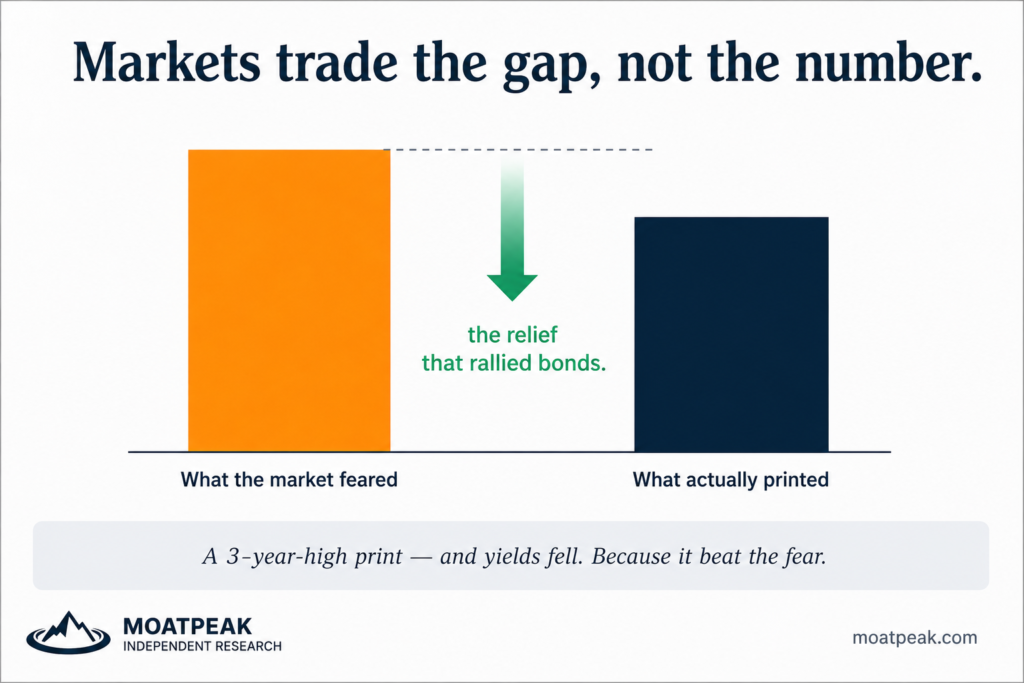
Something odd happened on Thursday. The Fed’s favourite inflation gauge came in at a three-year high, genuinely hot, and bonds rallied. Yields fell. A “bad” number was met with relief. If that looks backwards, it’s one of the most useful things to understand about markets.
Prices don’t move on whether a number is good or bad. They move on whether it’s better or worse than what everyone had already braced for. The market had been bracing for an inflation print hot enough to force the Fed into a second rate hike. It came in hot, but not that hot. So against the fear, it landed as a relief, and the relief is what traded.
This is why you’ll sometimes see a company beat earnings and fall, or miss and soar; why “terrible” news sparks a rally and “great” news a selloff. The headline number is only half the story. The other half, the half that actually moves the price, is the expectation it’s measured against, and that part rarely makes the headline. So next time the market reacts the “wrong” way to the news, you’ll know what it’s really trading: not the fact, but the gap between the fact and the fear.
Get the Weekly Explainer
The biggest market story explained, every week. Free, by email.
Explore the research library
Company, industry and market reports with sources, charts, possible outcomes and the full evidence.
More free explainers
Markets, companies, portfolio basics and investing foundations. All free articles.
Back to Learn