

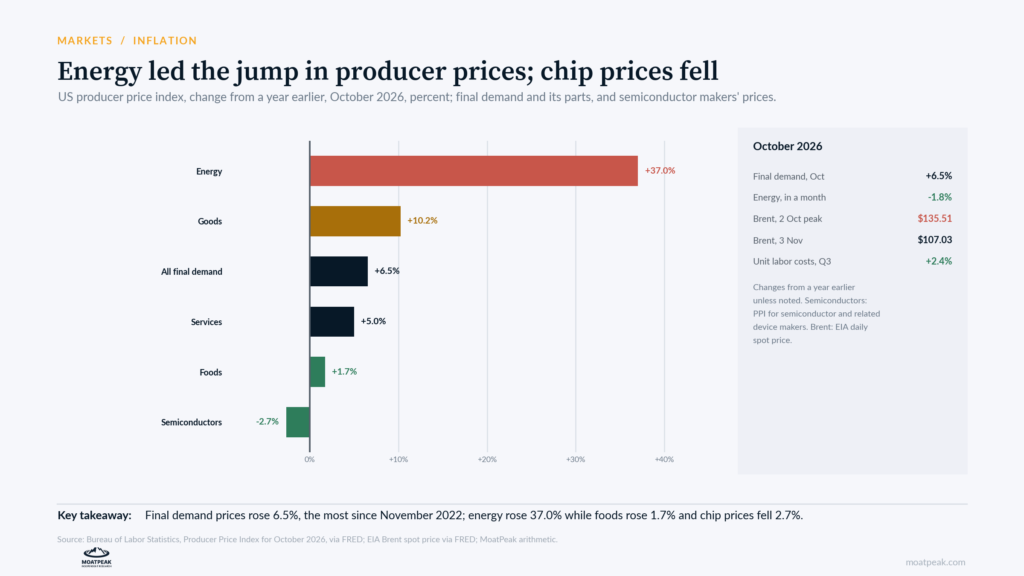
Food and chips, two common culprits, did little of the work. Producer prices for food rose 1.7 percent, and prices charged by semiconductor makers fell 2.7 percent. Energy rose 37.0 percent, and goods overall rose 10.2 percent.
Energy prices have started to fall. The energy index fell 1.8 percent in October, and Brent crude dropped from $135.51 on 2 October to $107.03 on 3 November, according to EIA data. The spring jump in energy prices also drops out of the yearly comparison from March 2027.
Services, the largest part of the index, rose 5.0 percent. That is the part to watch. Unit labor costs rose just 2.4 percent in the year through the third quarter.
Our read: energy is the swing factor in producer inflation, and it is starting to reverse. That weakens the case for higher interest rates built on this number.
Research, not advice.
Get the Weekly Explainer
The biggest market story explained, every week. Free, by email.
Explore the research library
Company, industry and market reports with sources, charts, possible outcomes and the full evidence.
More free explainers
Markets, companies, portfolio basics and investing foundations. All free articles.
Back to Learn