

Something rare happened on Wall Street over the weekend: people actually agreed.
Oil prices climbed above $100 a barrel due to fighting in the Middle East, and many top forecasters agreed that the US central bank would need to raise interest rates.
If that connection isn’t clear, here’s how it works: since almost everything needs to be transported, higher fuel costs make most things more expensive. When prices rise quickly, central banks usually raise interest rates to make borrowing costlier, slow down spending, and bring prices under control. So, expensive oil often leads to higher rates.
But by Monday afternoon, that prediction was already off the table.
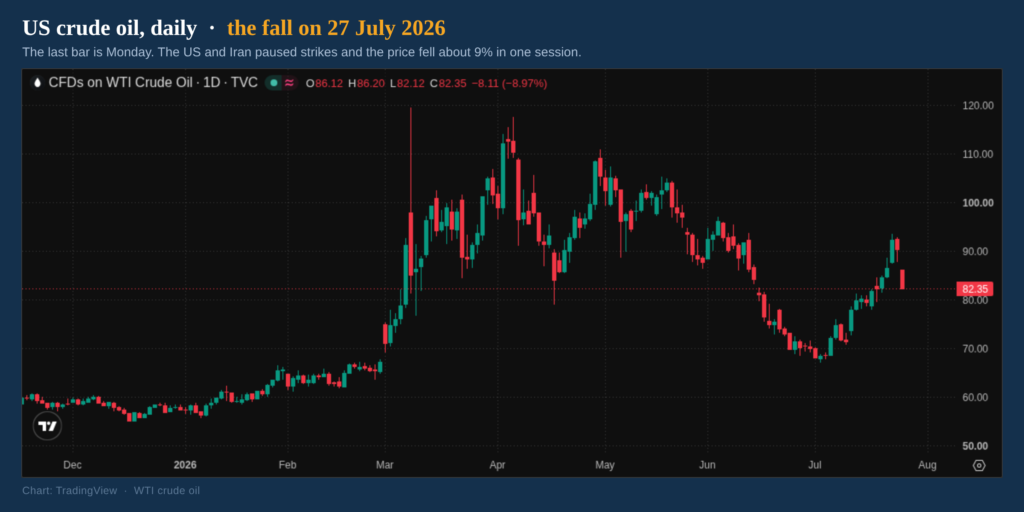
What changed wasn’t even an economic event. The US and Iran paused their strikes. There was no treaty or settlement, just a pause to allow for talks. Oil prices dropped about 9% in one session, and the odds of a rate hike this week fell to about one in three. The chart shows it: the last bar is Monday.
Just two days: that’s how long the market’s most confident view lasted.
But here’s what really matters, and it’s not just about oil or interest rates.
The week’s strongest consensus was based on the least predictable factor out there. It wasn’t about inflation, jobs, or anything you can study over time. It all depended on whether two governments would keep fighting over one weekend. No one can predict that. It’s like a coin toss decided by people who don’t explain their choices.
This is actually the third time since May that an oil price spike has reversed in just a few days. Each time, the pattern is the same: prices jump, bold forecasts follow, and then everything unwinds.
We pointed out the risk of a reversal each time, and we want to be clear about what that means. We didn’t predict the pause. No one did. Instead, we chose not to take a position that depended on the fighting continuing.
That’s the real lesson, even if it sounds dull. The protection wasn’t about making a better prediction. It was about not betting on something so unpredictable, and keeping the position small enough that a mistake wouldn’t be too costly.
What does this mean for you? When you feel very confident about something, look at what your confidence is based on. If it all comes down to an unpredictable human decision, keep your opinion but make a smaller bet. Being sure of your answer doesn’t matter if it’s built on a coin toss.
You can read how we’re applying this lesson in this week’s brief at https://moatpeak.com.
Educational research only. Not personalised investment advice. MB “MoatPeak Group”.
Get the Weekly Explainer
The biggest market story explained, every week. Free, by email.
Read the complete Member report
Sources, charts, possible outcomes and the full evidence behind this article.
Then $19/month. Cancel online before the trial ends.
More free explainers
Markets, companies, portfolio basics and investing foundations. All free articles.
Back to Learn