

 Notes
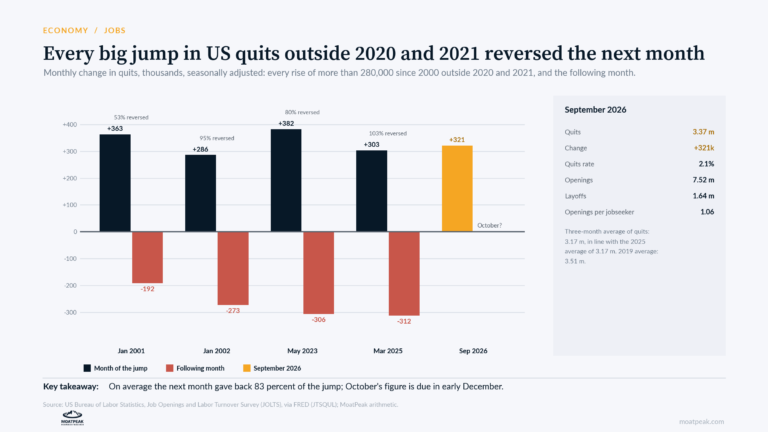
Americans quit 3.37 million jobs in September, up 321,000 from August.
It was the fifth-largest monthly rise since the survey began in December 2000, lifting the quits rate to 2.1 percent from 1.9 percent. Many read it as workers regaining confidence, and as one more reason for the Fed to keep rates high.
 Notes
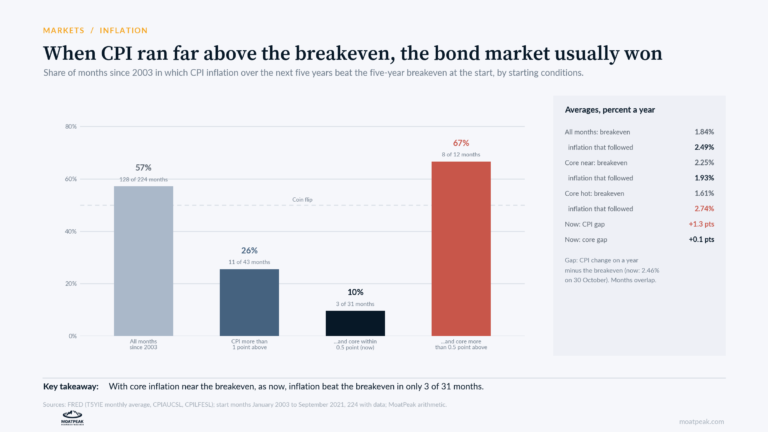
CPI ran more than a point above the breakeven in 43 months since 2003. Inflation beat it 11 times.
US consumer prices rose 3.7 percent in the year through September. The bond market’s price for inflation over the next five years, the five-year breakeven, closed October at 2.46 percent. That gap looks like complacency.
 Notes
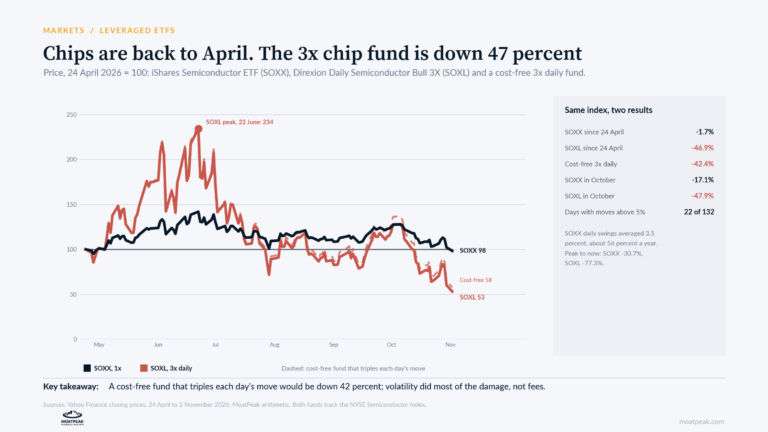
SOXX closed 1.7 percent below its 24 April level. SOXL lost 46.9 percent.
On 2 November, the iShares Semiconductor ETF (SOXX) closed 1.7 percent below its level of 24 April. Over the same span, SOXL, which seeks three times the same index’s daily move, lost 46.9 percent.
 Notes
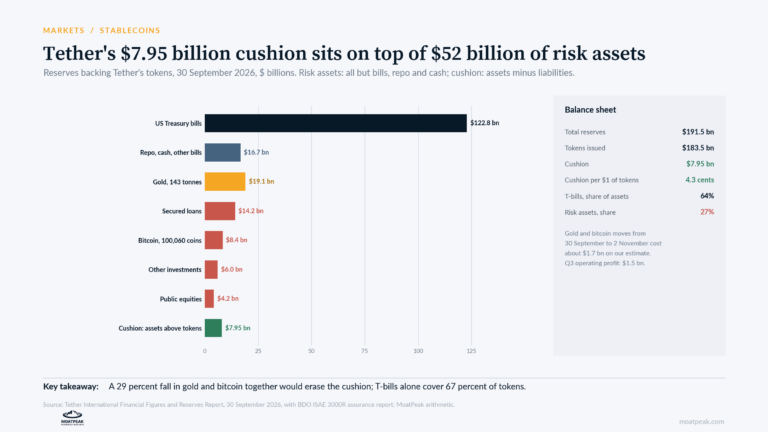
Tether holds $122.8 billion of Treasury bills. Its cushion moves with gold and bitcoin.
Bond investors will read every line of the Treasury’s refunding statement on 4 November. Meanwhile, a stablecoin company has become a large holder of the bills the Treasury sells.
 Notes
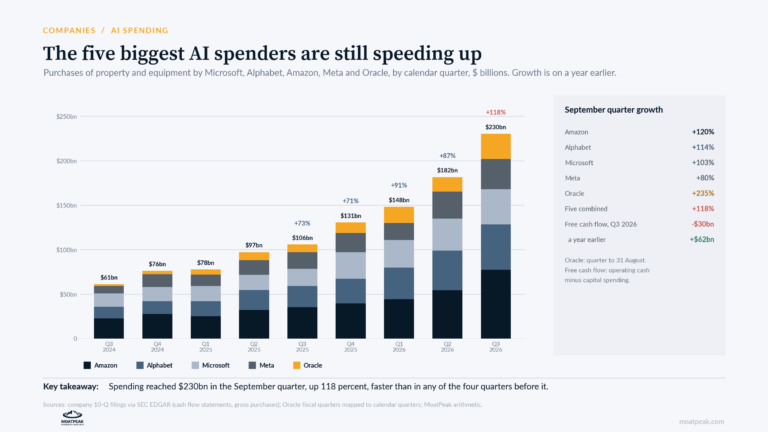
The filings show no slowdown in AI spending yet. What has slowed is the payback.
Chip stocks struggled in October. The semiconductor ETF SMH lost 14.2 percent, and the common explanation is that growth in AI spending has peaked.
 Notes
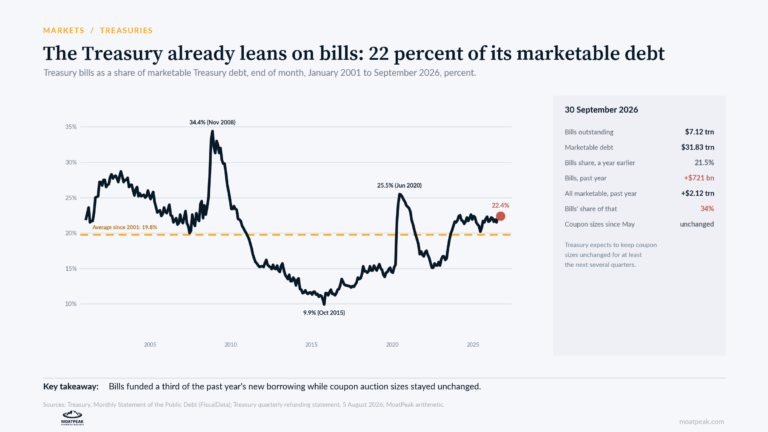
The Treasury announces its borrowing plans for the coming quarter on 4 November.
Bond bulls hope it will trim long-term issuance. Its own figures show it has already been leaning on bills.
NotesApple Falls 4.5% Premarket: Strong Sales, Shrinking Margins
Apple ($AAPL) shares are down approximately 4.5% in premarket trading, despite reporting better-than-expected quarterly earnings.
 Notes
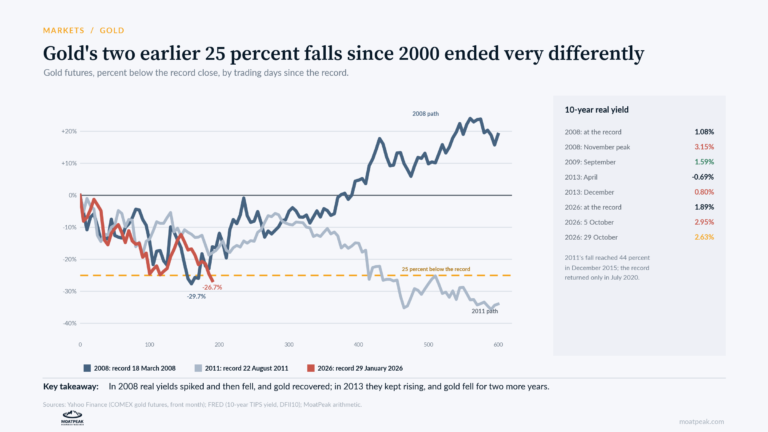
Since 2000, gold has closed more than 25 percent below a record three times.
The third began on 30 October, when it closed at $3,898.90, 26.7 percent below January’s record. The first two ended very differently.
 Notes
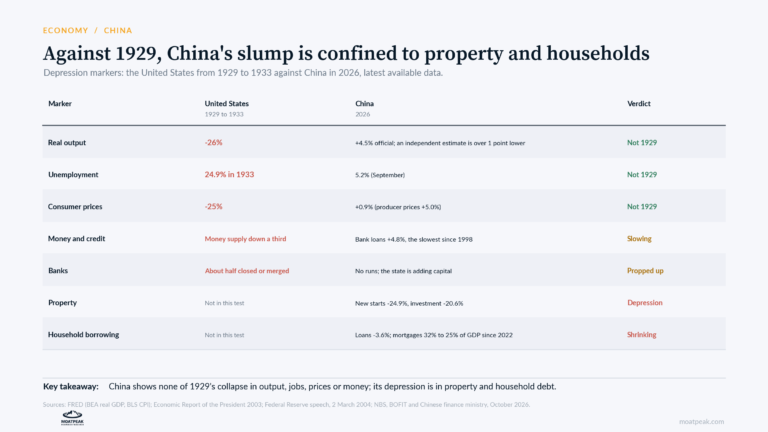
Forget GDP for a moment. The number that matters most in China this year is household borrowing.
Household loans fell 3.6 percent in the year through September. Mortgage balances have fallen from almost 39 trillion yuan in September 2022, 32 percent of GDP, to 35.9 trillion, 25 percent.